
Why Butterfly Patterns Matter in Miao Embroidery
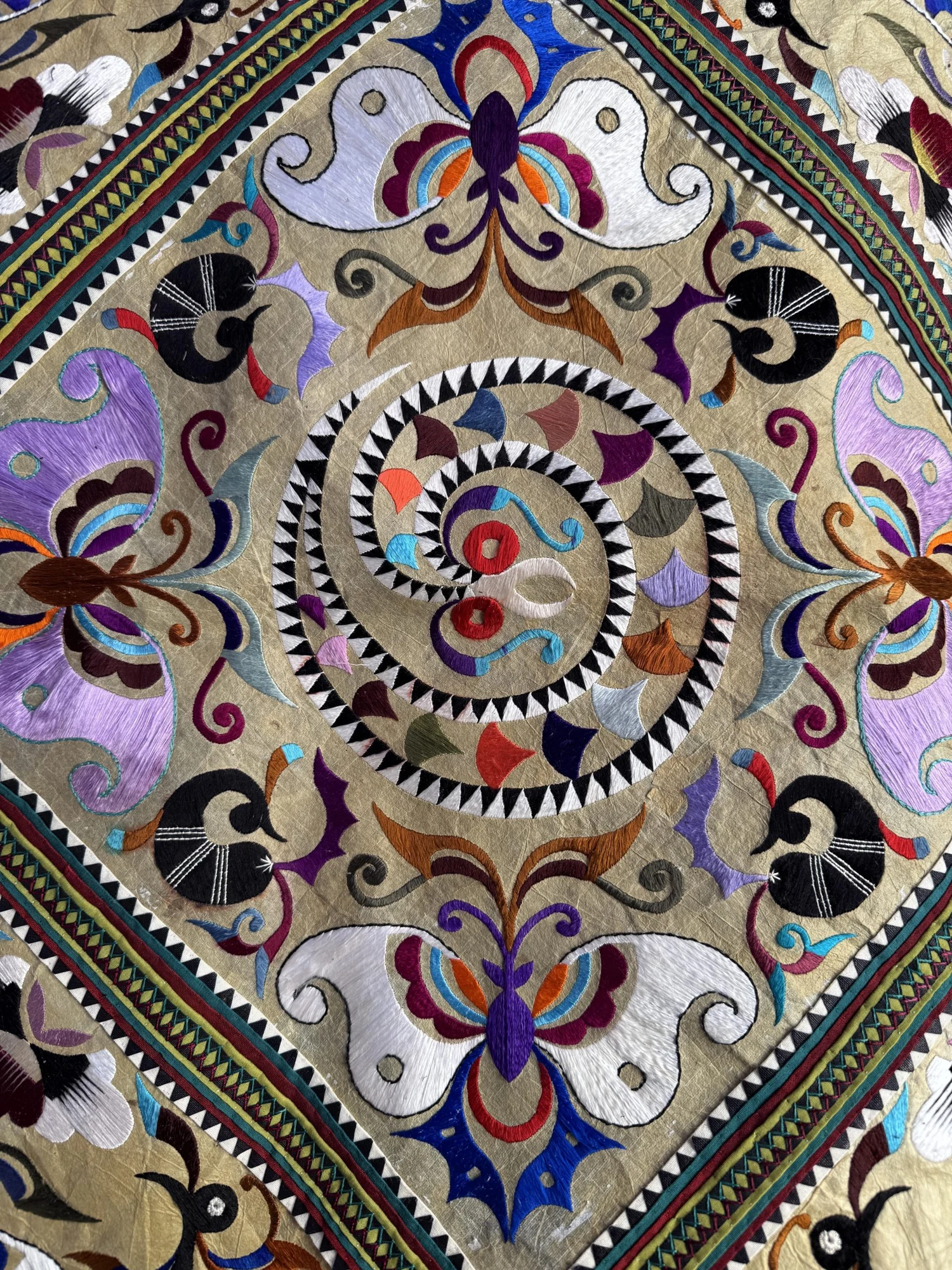
Butterfly patterns are among the most recognizable motifs in Miao embroidery.
At first glance, they may look decorative: bright wings, curved bodies, flowing lines and symmetrical shapes stitched across cloth. But in Miao textile culture, the butterfly can carry deeper meanings. It can speak of origin, nature, blessing, transformation and continuity.
For AETHNO, butterfly embroidery is not simply a pretty pattern. It is one of the visual languages through which handmade Miao textiles connect beauty with memory.
A Motif That Carries More Than Beauty
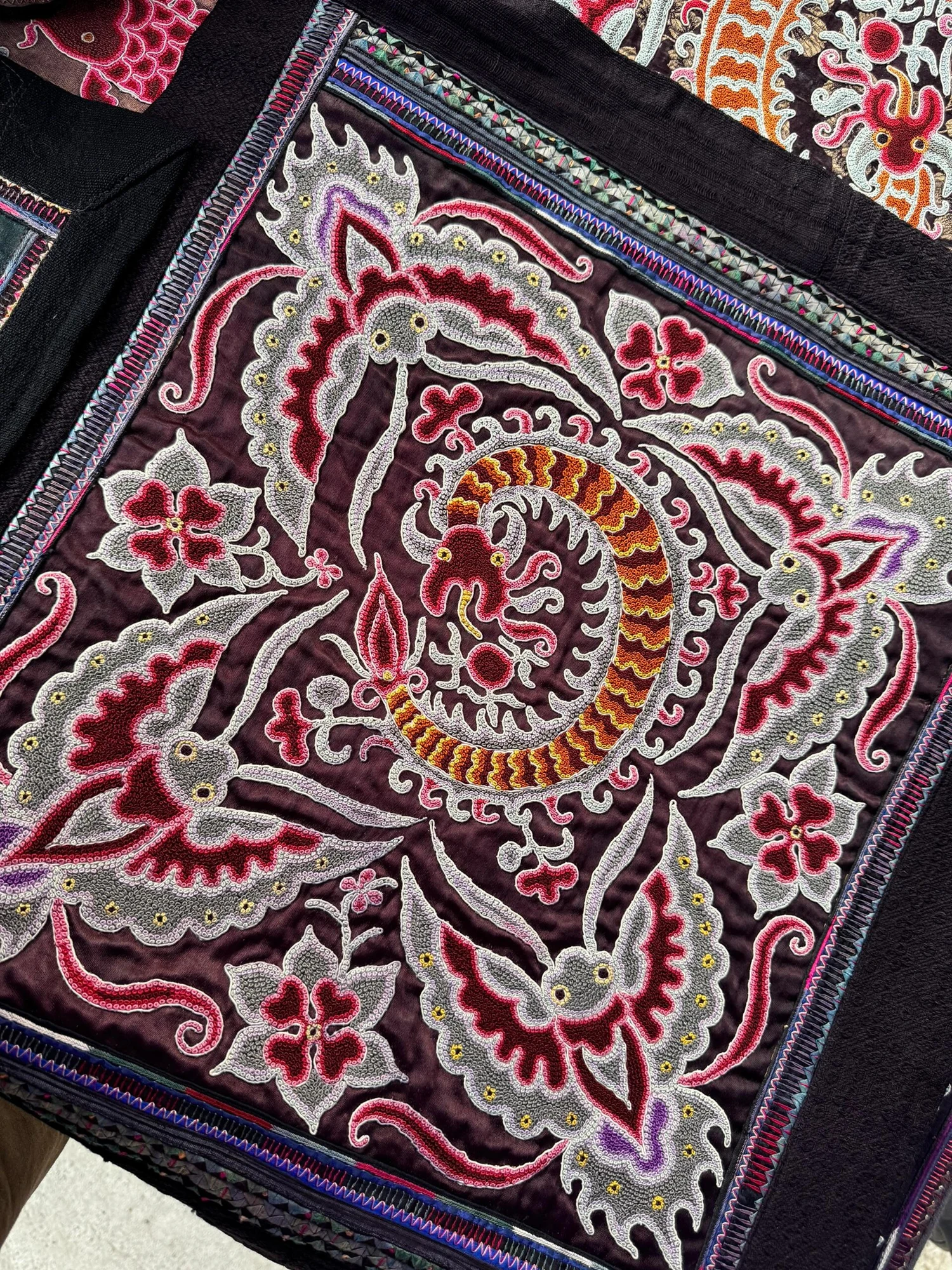
In Miao embroidery, patterns often do more than fill empty space. They help organize a textile, mark rhythm, show regional style and carry symbolic meaning.
The butterfly is especially powerful because of its shape. Its wings create balance. Its body gives the design a center. Its movement suggests lightness and life. When placed in a repeated pattern, it can make the whole textile feel alive.
This is why butterfly motifs often appear on traditional clothing, embroidered panels, collars, sleeves, bands and decorative textile pieces. The butterfly brings movement into the cloth.
It is not a flat symbol. It feels as if it is about to move.
The Butterfly Mother and Miao Origin Stories
In some Miao traditions, the butterfly is connected with origin stories and the idea of life beginning from a maternal source. The figure often called “Butterfly Mother” is one of the most meaningful images in parts of Miao myth and visual culture.
This does not mean every butterfly embroidery has one fixed meaning. Miao communities are diverse, and motifs can vary by region, family, garment type and occasion. Still, the butterfly often carries associations with birth, growth, fertility, protection and continuity.
This is why butterfly embroidery should be read with care. It is not only a decorative insect. In many contexts, it can represent the beginning of life, the continuation of family and the connection between people and nature.
How Butterfly Patterns Are Built in Embroidery
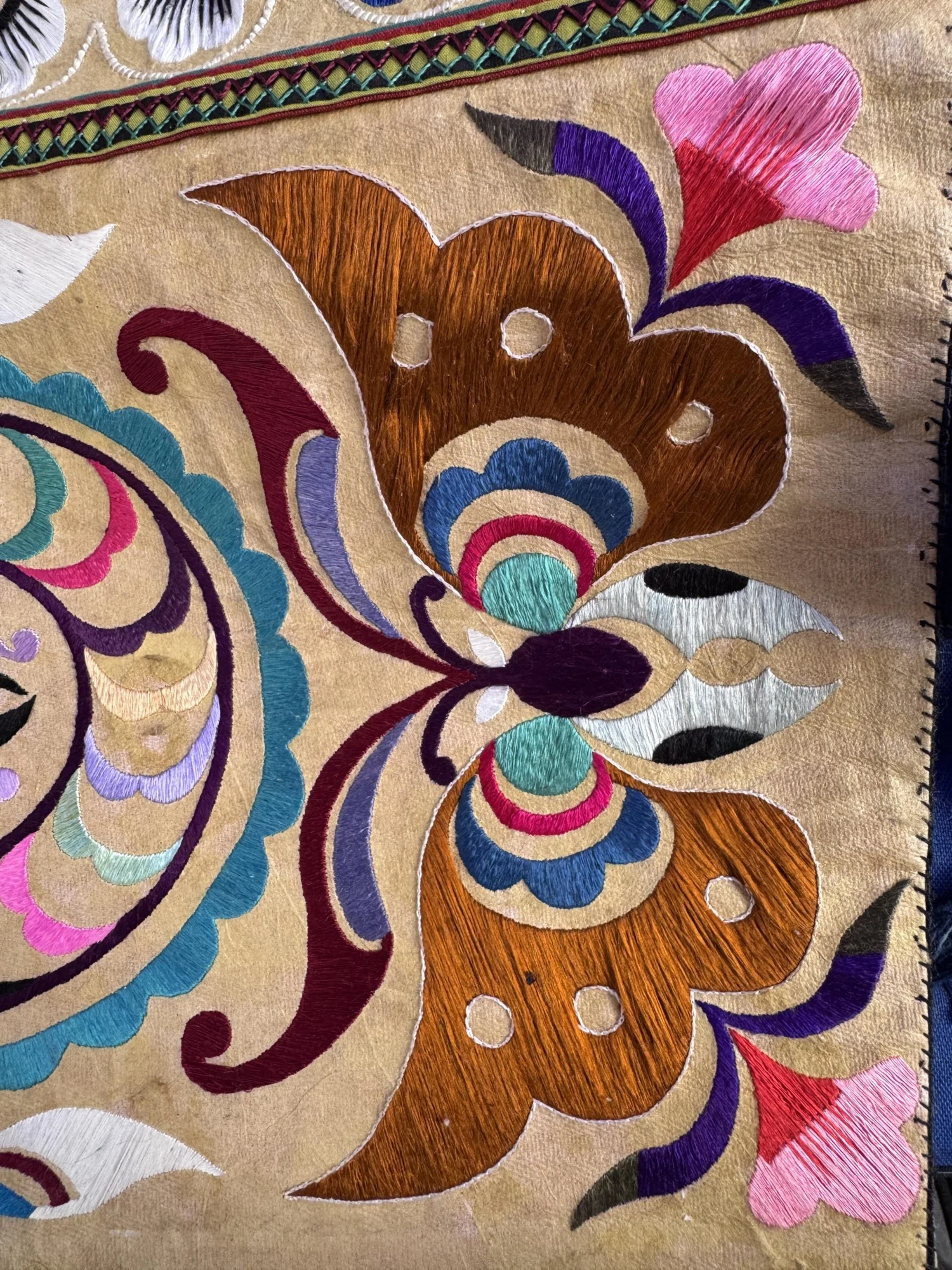
A butterfly motif may look simple from far away, but close inspection reveals how much work is hidden inside the design.
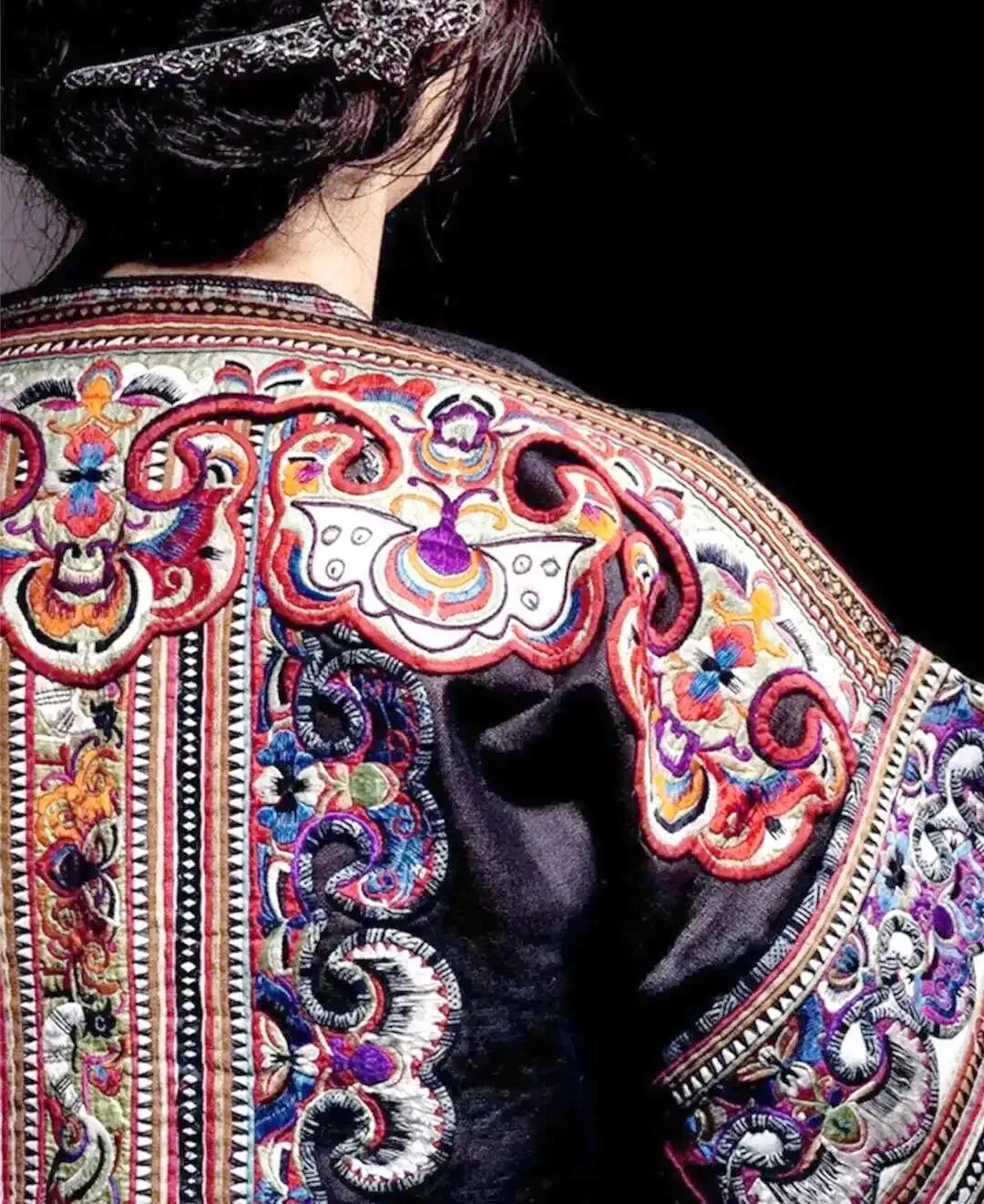
The wings may be filled with smooth satin-like stitches. The edges may be outlined with contrasting thread. Small color blocks may be layered to create rhythm. Curved lines may follow the natural shape of the wings. In some pieces, appliqué, layered fabric, metallic thread, braid-like edges or dense filling stitches may appear together.
The beauty of the butterfly depends on control.
A maker must balance shape, symmetry, color and texture. If the wings are too stiff, the butterfly loses movement. If the colors are too scattered, the design loses harmony. If the stitches are uneven, the surface loses rhythm.
In handmade embroidery, the butterfly is both a symbol and a test of skill.
Color, Movement and Symmetry
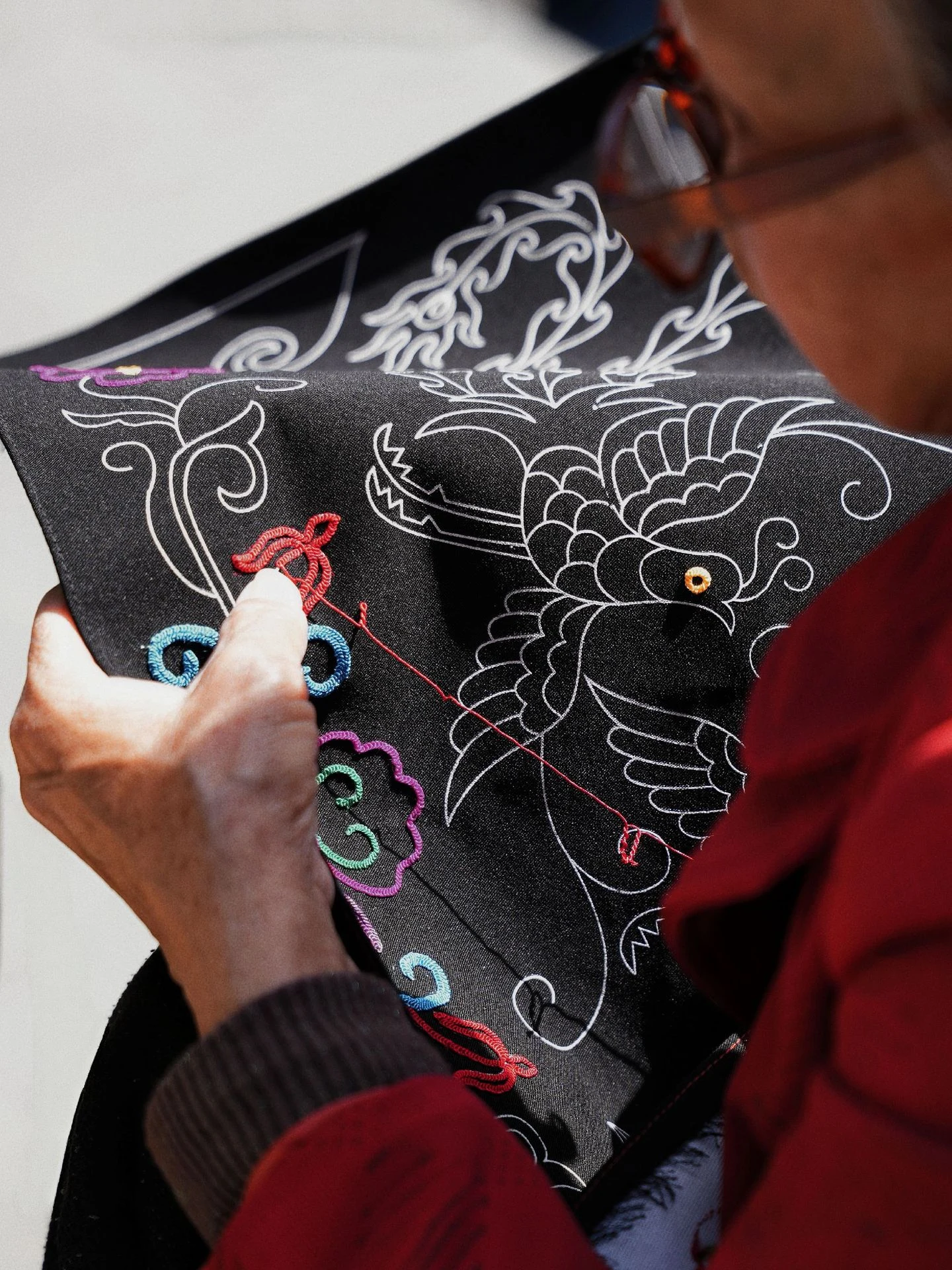
Many butterfly patterns in Miao embroidery use strong color contrast. Warm tones may sit beside cool colors. Light thread may outline dark shapes. Curved details may be placed against geometric borders.
This contrast is important. It makes the butterfly stand out from the textile background while still belonging to the whole composition.
Symmetry is also common. A butterfly naturally has two wings, and this structure allows the maker to build visual balance. But handmade symmetry is never mechanical. Small differences in thread direction, stitch density and color placement give the piece a human quality.
That is part of the charm. The pattern is balanced, but not lifeless.
Butterfly Patterns on Traditional Garments
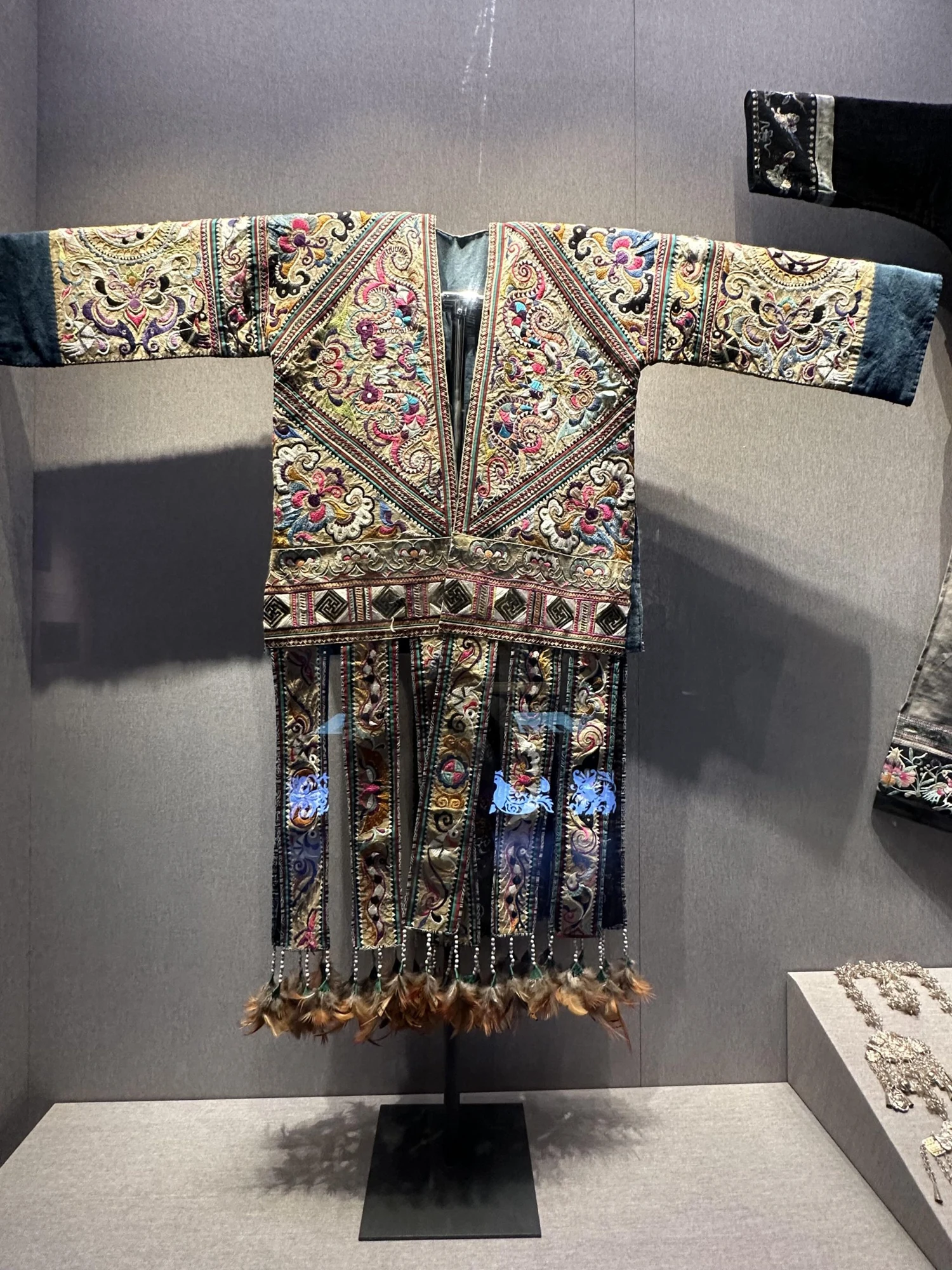
Historically, Miao embroidery was closely connected with clothing and ceremonial textiles. Butterfly motifs could appear as part of larger decorative systems, alongside birds, flowers, dragons, spirals and geometric borders.
On garments, these motifs are not isolated. They interact with the shape of the body, the structure of the clothing and the movement of the wearer. A butterfly on a sleeve, back panel or embroidered band may look different when the garment is worn than when it is laid flat.
This is one reason textile motifs are powerful. They do not only exist as images. They live with movement, posture and occasion.
A butterfly stitched onto clothing becomes part of a person’s presence.
From Heritage Motif to Modern Handmade Pieces
Today, butterfly patterns can be found not only in traditional garments, but also in smaller handmade pieces: earrings, pendants, brooches, textile panels, bags, headbands and framed embroidery.
This transformation allows the motif to enter modern life without losing its cultural roots.
A person may not wear a full embroidered ceremonial garment. But they may wear a pair of butterfly-inspired earrings. They may hang a small embroidered textile at home. They may choose a handmade piece as a meaningful gift.
In this way, the butterfly motif continues to move — from traditional clothing to contemporary objects, from community memory to personal style.
Why Butterfly Embroidery Feels Meaningful as a Gift
Butterfly embroidery is especially suitable for gifts because it carries gentle, positive associations.
It can suggest renewal.
It can suggest beauty.
It can suggest blessing.
It can suggest a wish for life to keep unfolding.
Because every handmade piece is slightly different, a butterfly embroidery gift can feel more personal than a mass-produced accessory. It is not only chosen for its appearance, but also for the story it carries.
This is why butterfly motifs work well for birthdays, cultural gifts, meaningful jewelry, textile art and one-of-a-kind handmade pieces.
How to Look Closely at a Butterfly Motif
When viewing a butterfly embroidery piece, look beyond the shape.
Notice how the wings are outlined.
Notice how the colors are layered.
Notice whether the stitch direction changes between different wing sections.
Notice how the butterfly sits inside the border.
Notice whether flowers, birds, spirals or geometric forms appear around it.
These details reveal the maker’s decisions.
A butterfly motif is not only about the final image. It is about how thread, fabric, color and cultural memory come together.
Explore Butterfly-Inspired Miao Embroidery
Butterfly patterns remind us that handmade textiles are not only objects. They are carriers of imagination, patience and inherited visual language.
At AETHNO, we share Miao embroidery pieces that honor this slow and meaningful craft. Some pieces are bold and ceremonial in feeling. Others are small enough for daily wear. Each one offers a way to bring handmade cultural beauty into modern life.
Related Links
FAQ
What does the butterfly mean in Miao embroidery?
In some Miao traditions, the butterfly is connected with origin stories, life, fertility, blessing and continuity. Meanings can vary by region and context, so the motif should not be reduced to one single explanation.
Is every butterfly pattern in Miao embroidery symbolic?
Not always in the same way. Some butterfly motifs carry strong cultural meaning, while others may be used more for beauty, balance or decorative rhythm. The meaning depends on the community, object and design context.
Why are butterflies common in Miao textile art?
Butterflies offer a balanced and expressive shape. Their wings, curves and symmetry make them suitable for embroidery, while their cultural associations make them meaningful in many designs.
Can butterfly embroidery be worn every day?
Yes. Modern handmade pieces such as earrings, pendants, brooches, headbands and small textile accessories can bring butterfly-inspired embroidery into everyday styling.
How should I care for handmade butterfly embroidery?
Avoid water, perfume, heavy friction and long direct sunlight. Store embroidered pieces separately and avoid pulling loose threads. For jewelry, keep textile parts away from moisture and chemicals.
Shop AETHNO: All products | Women | Men | Kids | Hmong New Year 2026 | Wholesale