
Jianhe Miao Dress: Silverwork, Red Geometry, and Regional Identity
In Guizhou, “Miao dress” is not one single visual system. Regional communities developed distinct silhouettes, color relationships, embroidery methods, and ways of arranging ornament. Jianhe is an especially useful place to begin because official heritage documentation describes Jianhe Miao clothing as exceptionally diverse: multiple local categories, nearly one hundred styles, and more than twenty embroidery methods are recorded within the county.
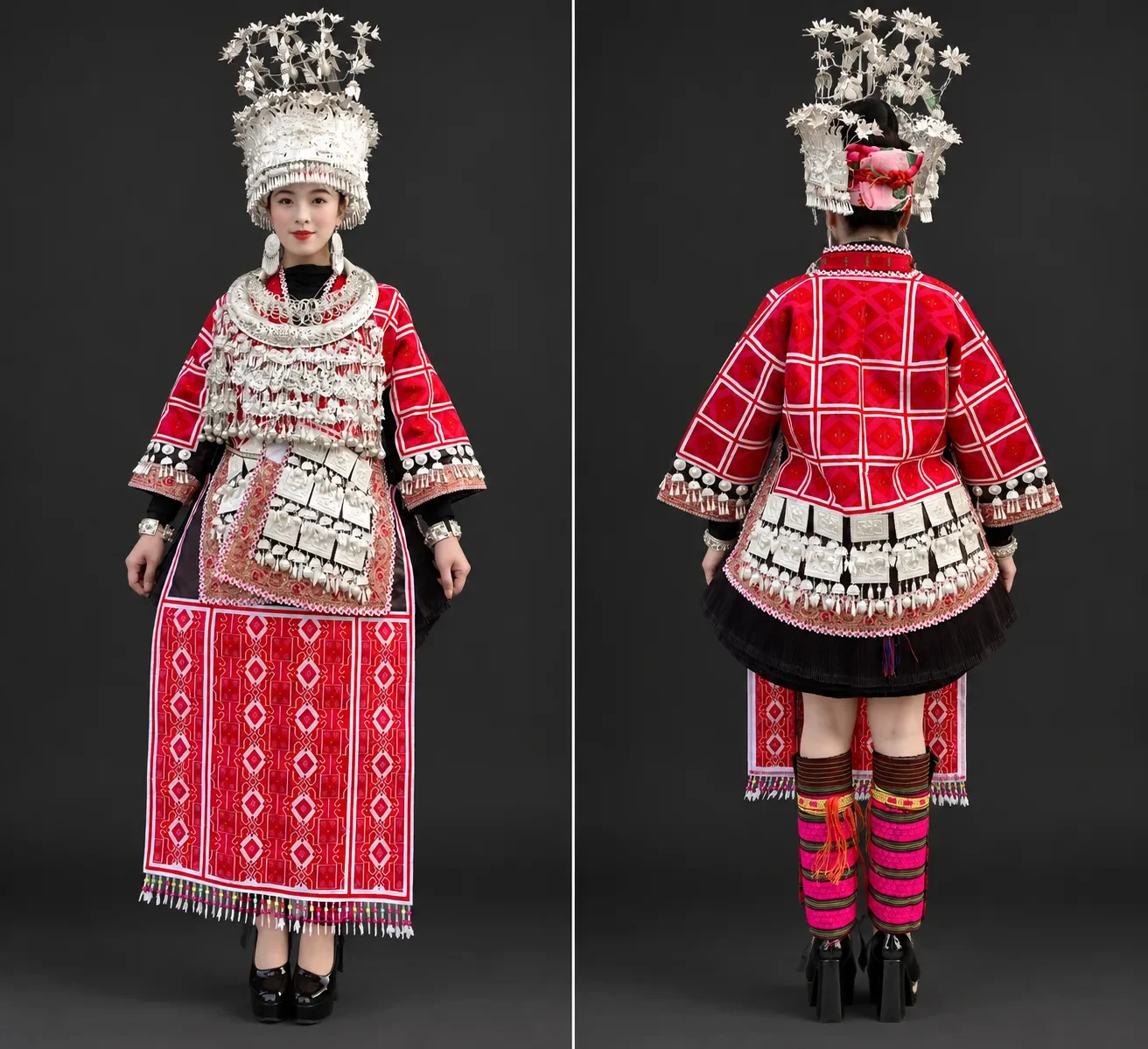
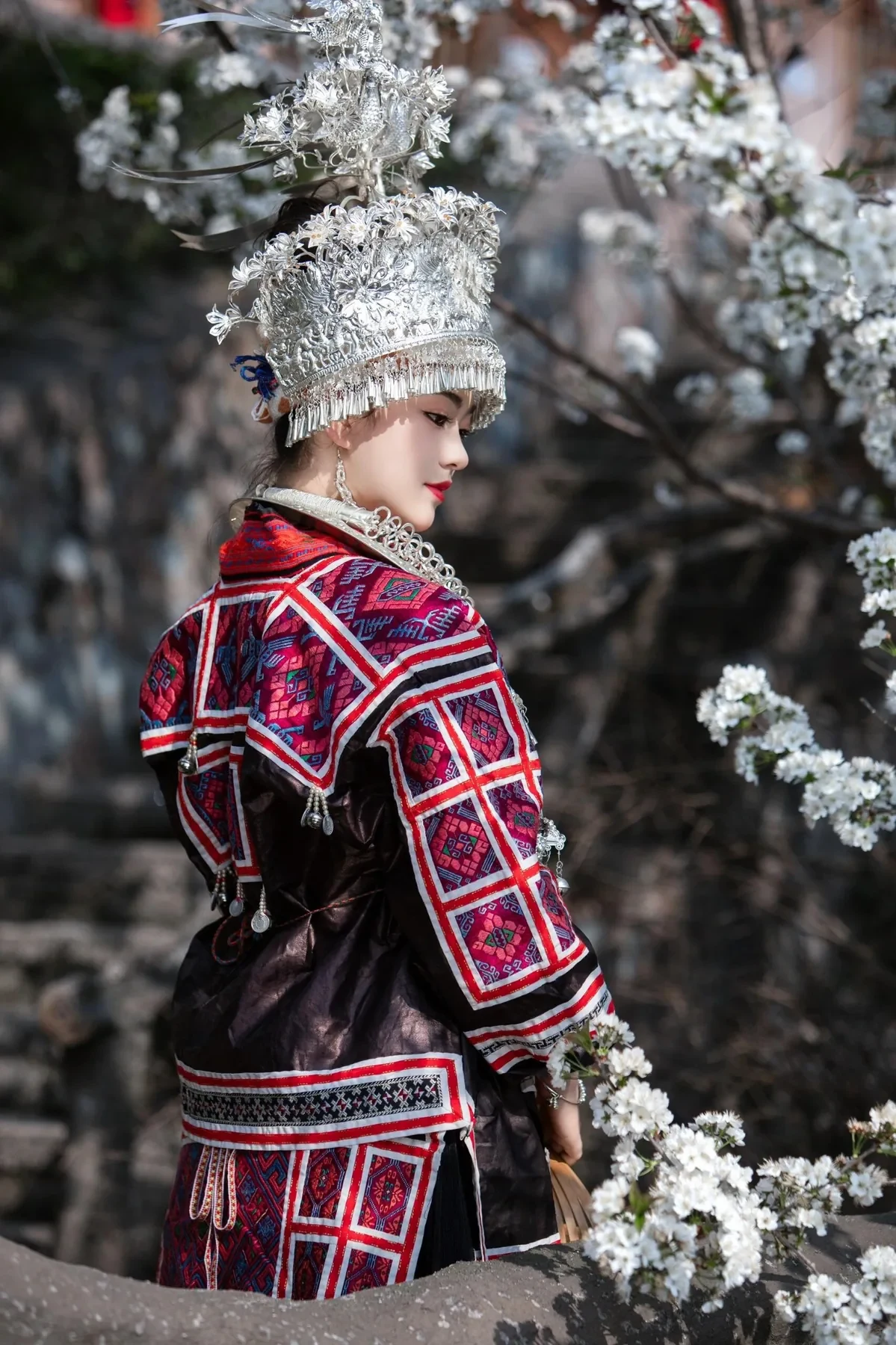
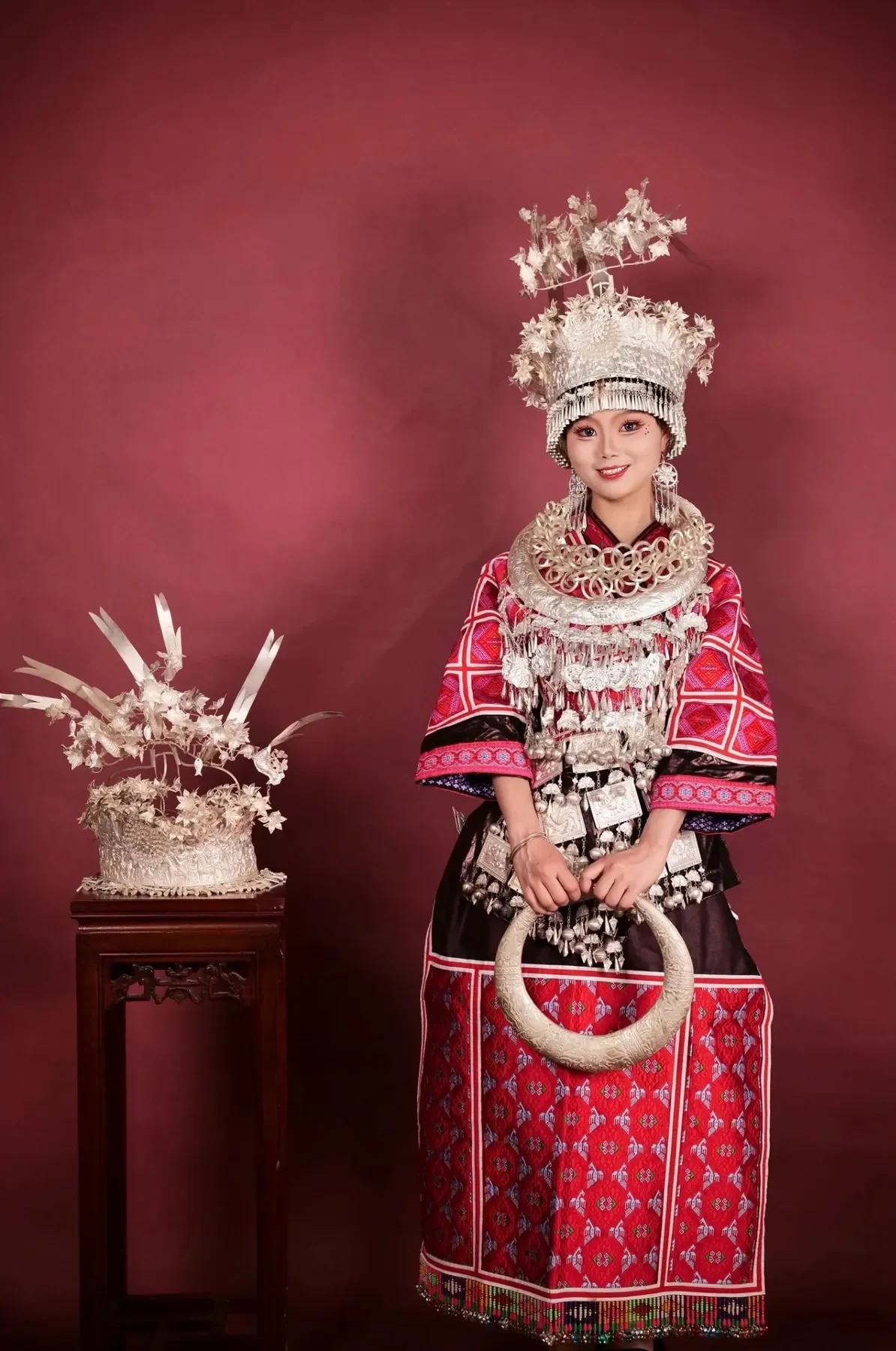
That diversity is visible before we even begin to name individual stitches. In the Jianhe images in this archive, the eye first meets a strong red field broken by dark fabric, geometric borders, and bright silver. The front and back are equally important. A full-length view explains proportion; a rear view reveals how bands of decoration continue across the shoulder and how the visual weight changes once the chest ornaments are no longer in front.
A dress system, not a single garment
Traditional dress is best understood as a layered system. The garment, apron or front panel, skirt, leg wraps, headdress, earrings, neck rings, chest ornaments, and smaller silver elements work together. Separating one piece from the rest can hide how carefully the silhouette has been built.
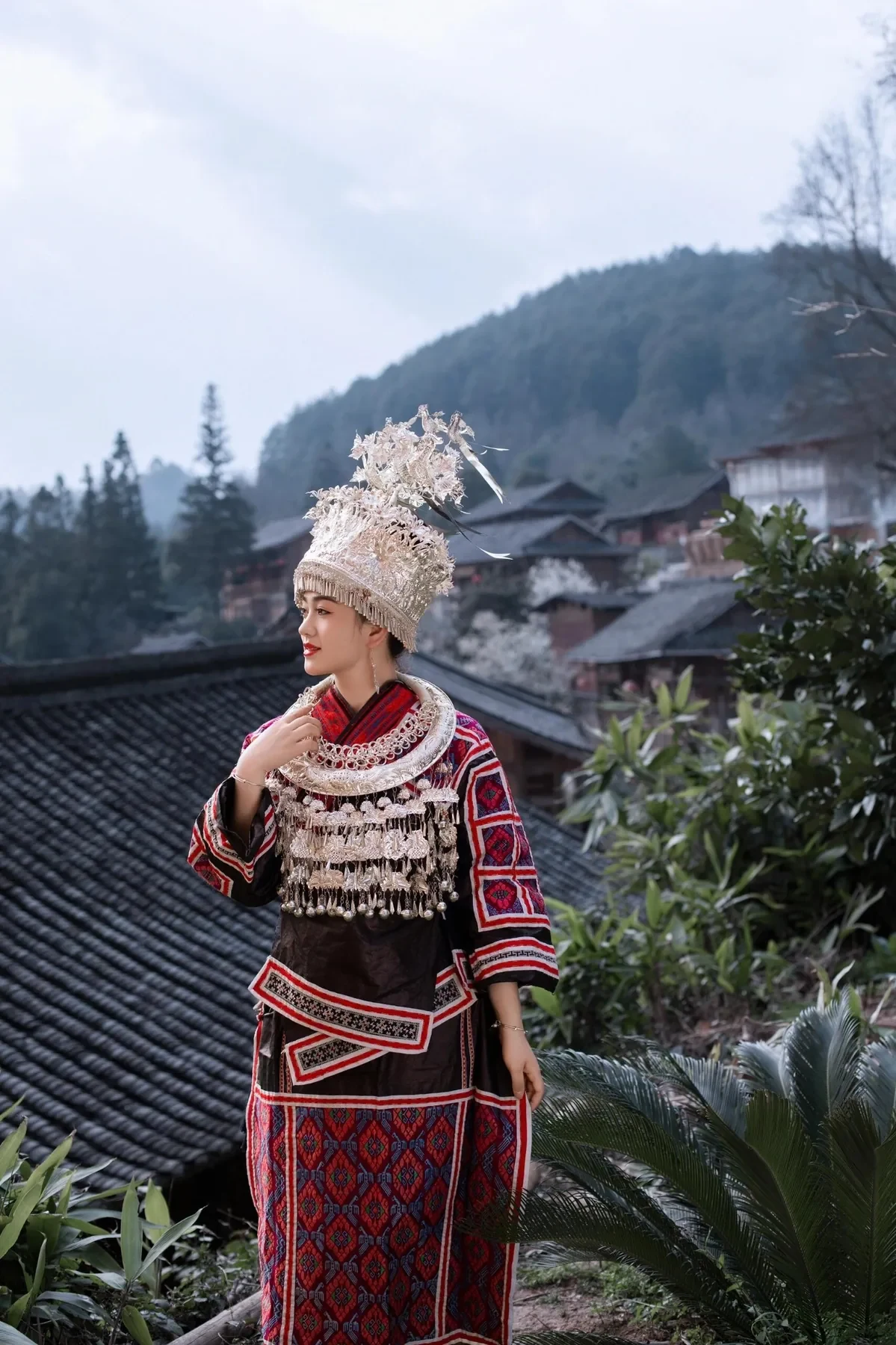
The Jianhe group shown here is especially effective for studying this relationship. The silver headdress creates height and brightness above the face, while the red-and-black textile structure carries the eye downward. Repeated framed motifs along sleeves and lower panels introduce rhythm. When the wearer turns, different embroidered and woven zones become dominant.
That change of viewpoint is why this article uses both front and back images. Heritage dress is three-dimensional. The construction around the shoulders, the placement of borders, and the relationship between ornament and fabric cannot be read from a single frontal portrait.
Embroidery as regional identity
China’s national intangible cultural heritage records recognize Jianhe Miao embroidery as part of the wider Miao embroidery tradition. The documentation emphasizes that forms and styles differ between regions, and Jianhe is known for a particularly rich variety of techniques.
This matters because “Miao embroidery” should not be treated as a generic decorative look. The value is in the local knowledge: where a band sits, how colors are balanced, how a motif is repeated, and which stitch is chosen for a particular surface.
In photographs, it is tempting to jump immediately to symbolic interpretation. A more responsible way to look is to begin with what can be seen and verified: contrast, symmetry, repetition, border construction, stitch density, and the relationship between textile and silver. Symbolic meanings can vary by locality and context, so they should be documented rather than guessed.
Silver changes the entire composition
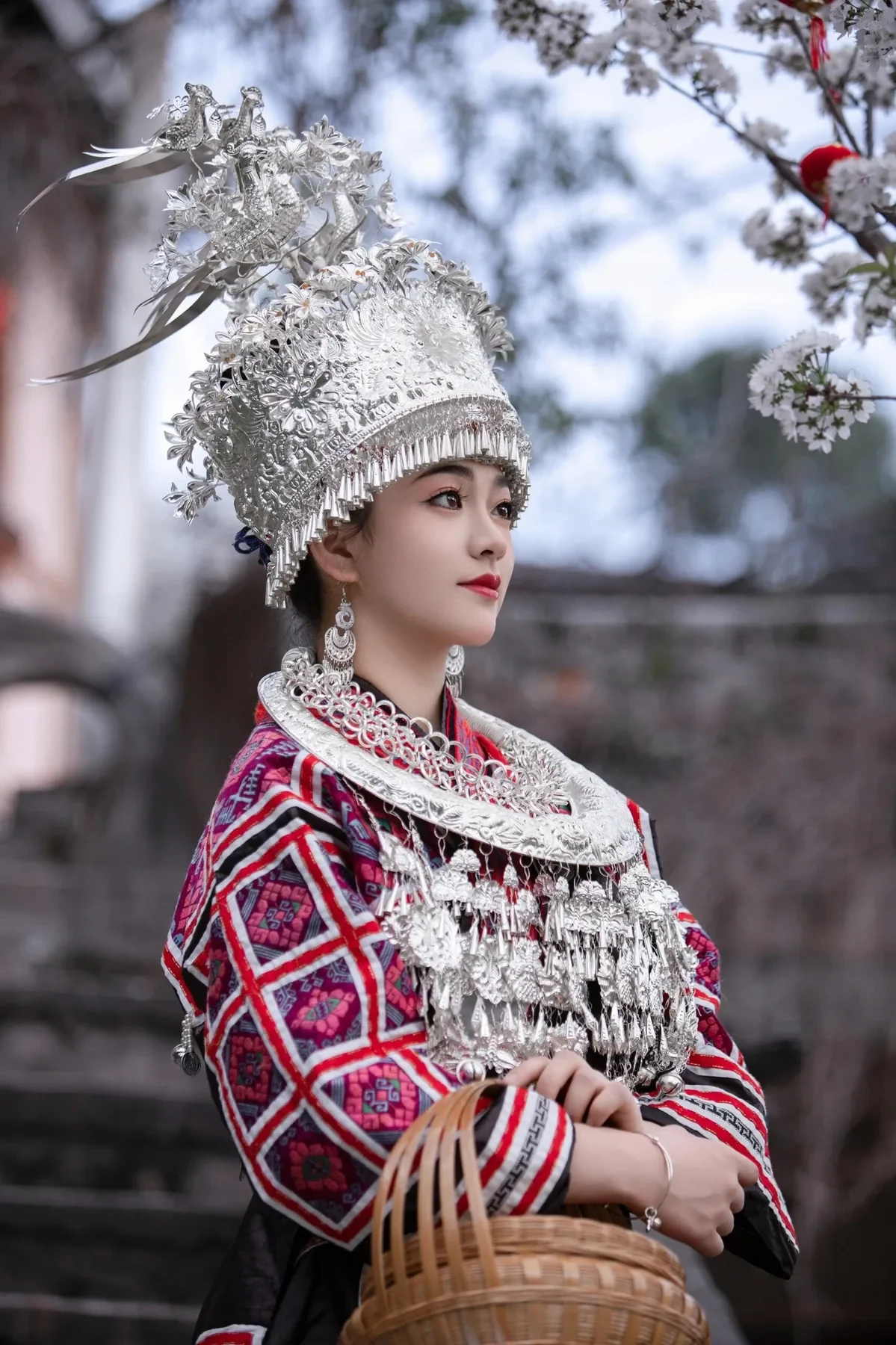
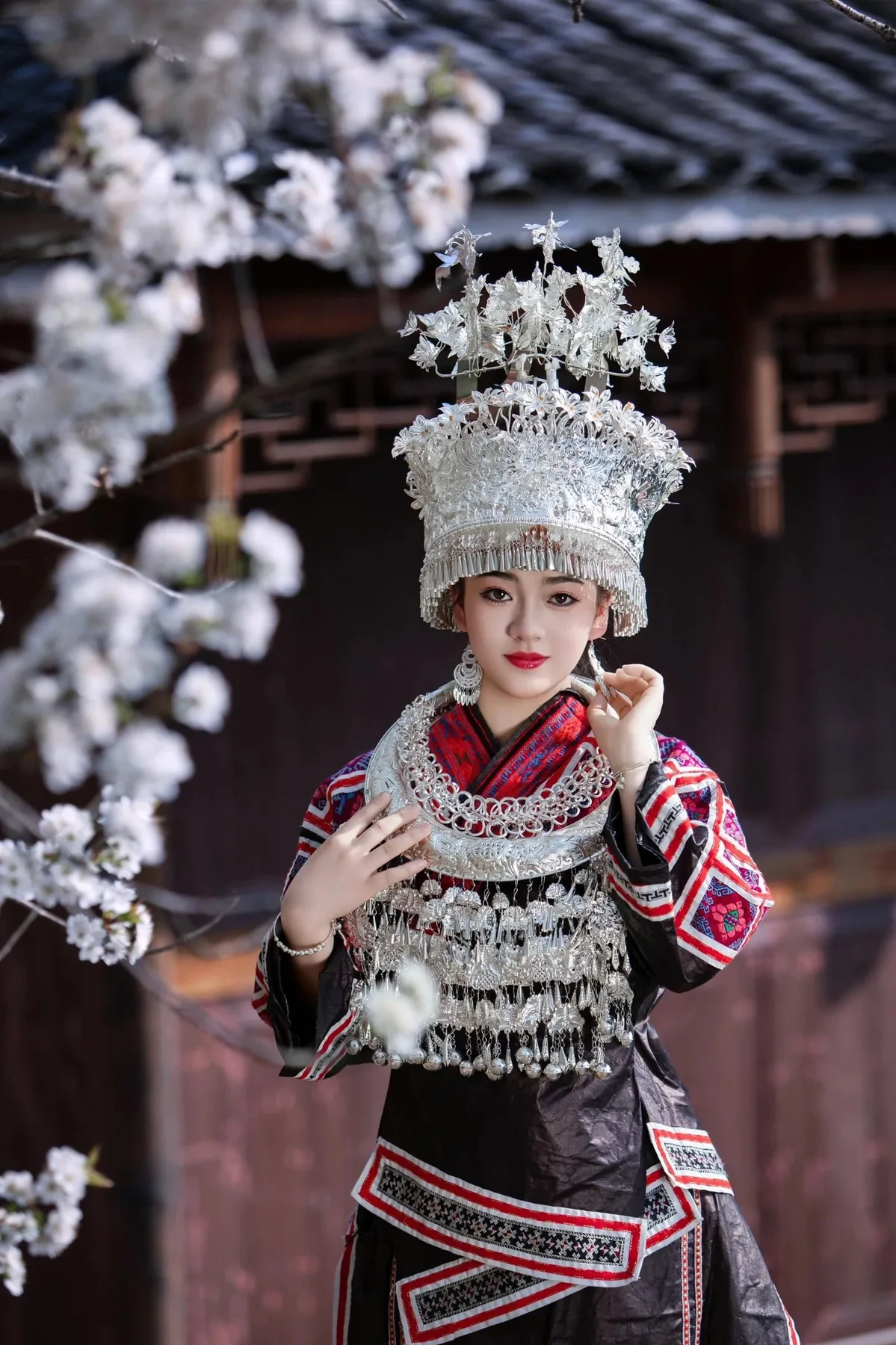
Silver is not a small accessory added at the end. In ceremonial dress, it can reorganize the visual structure of the body. Large neck pieces create broad horizontal lines. Hanging ornaments introduce movement. A headdress extends the silhouette upward. Bright metal also changes with natural light, which is why the same dress can look dramatically different in a studio and outdoors.
The village photographs in this set are therefore as important as the controlled studio views. Against dark roofs, stone, trees, and mountain light, the reflective surfaces of the silver become more vivid and the red textiles read differently.<!–
Why Jianhe belongs in a heritage archive
A collector’s or cultural archive should not flatten a living dress tradition into one “signature look.” Jianhe demonstrates the opposite lesson: regional dress can contain substantial internal variety.
For AETHNO, that is precisely why the Jianhe series is documented through multiple angles. The goal is not only to show beauty, but to preserve visual evidence of structure, ornament placement, and textile detail.
The most useful way to experience these images is slowly: first the complete silhouette, then the headwear, then the chest and sleeves, and finally the back. In that sequence, the clothing begins to read less like decoration and more like a regional visual language.
Looking closer
When viewing a Jianhe Miao dress, notice four things:
how red, black, white, and silver divide the body into visual zones;
how sleeve and shoulder borders organize the garment;
how the silver headdress and neck ornaments alter proportion;
how much information becomes visible only from the side or back.
Those details are the reason traditional dress deserves more than a single fashion image. It is clothing, craftsmanship, social memory, and regional identity held together in one moving form.
Continue exploring: What Is Miao Embroidery? · Why Butterfly Patterns Matter in Miao Embroidery · How to Wear Handmade Embroidery Jewelry in Daily Outfits
Shop AETHNO: All products | Women | Men | Kids | Hmong New Year 2026 | Wholesale