
Huangping Miao Dress: Silver Crowns, Red Textiles, and Ceremonial Presence
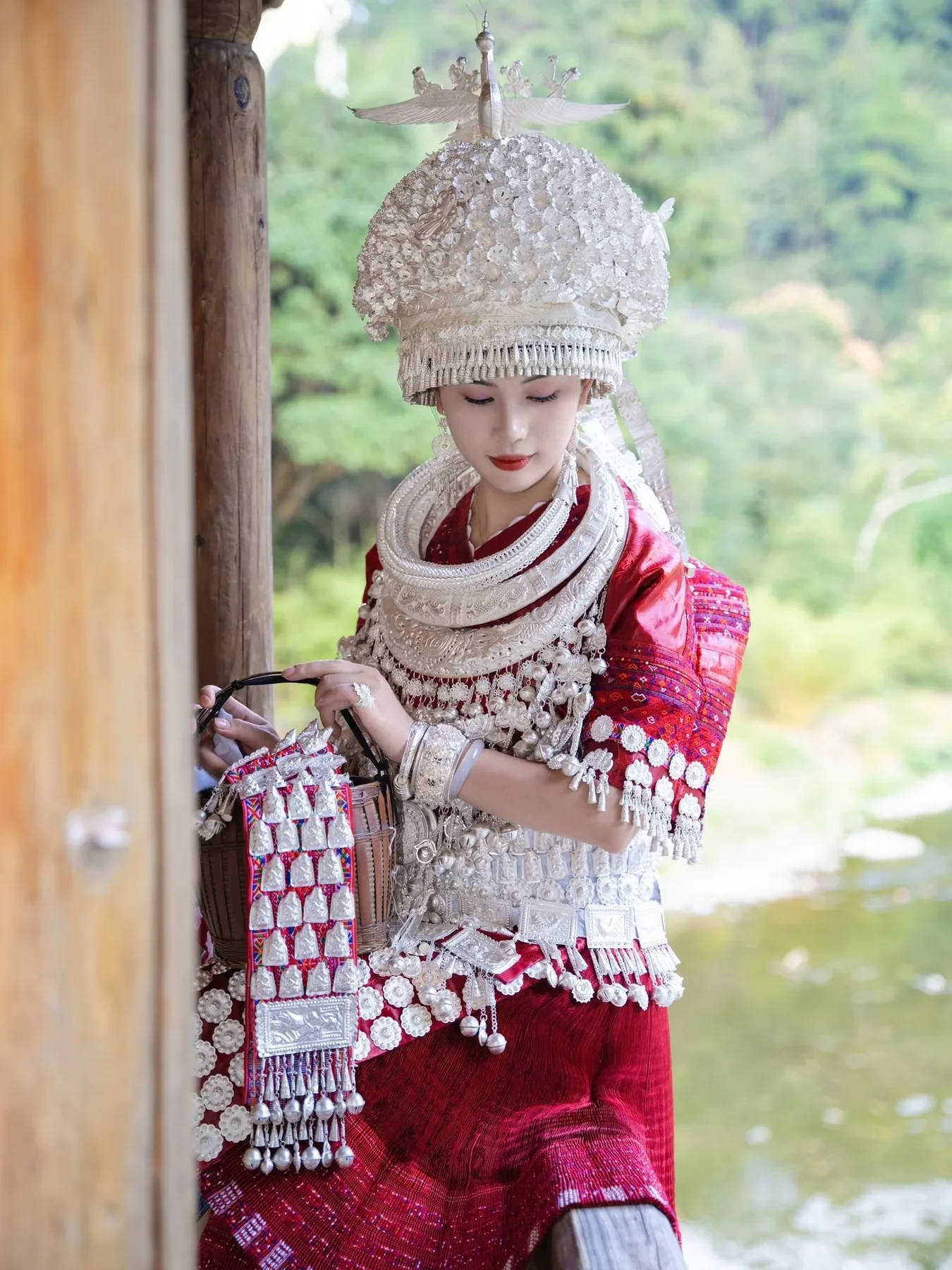
Huangping Miao ceremonial dress is immediately recognizable in these photographs for one reason: the relationship between vivid red textile and a dense field of bright silver. Yet the strongest impression comes not from either element alone. It comes from how they are layered.
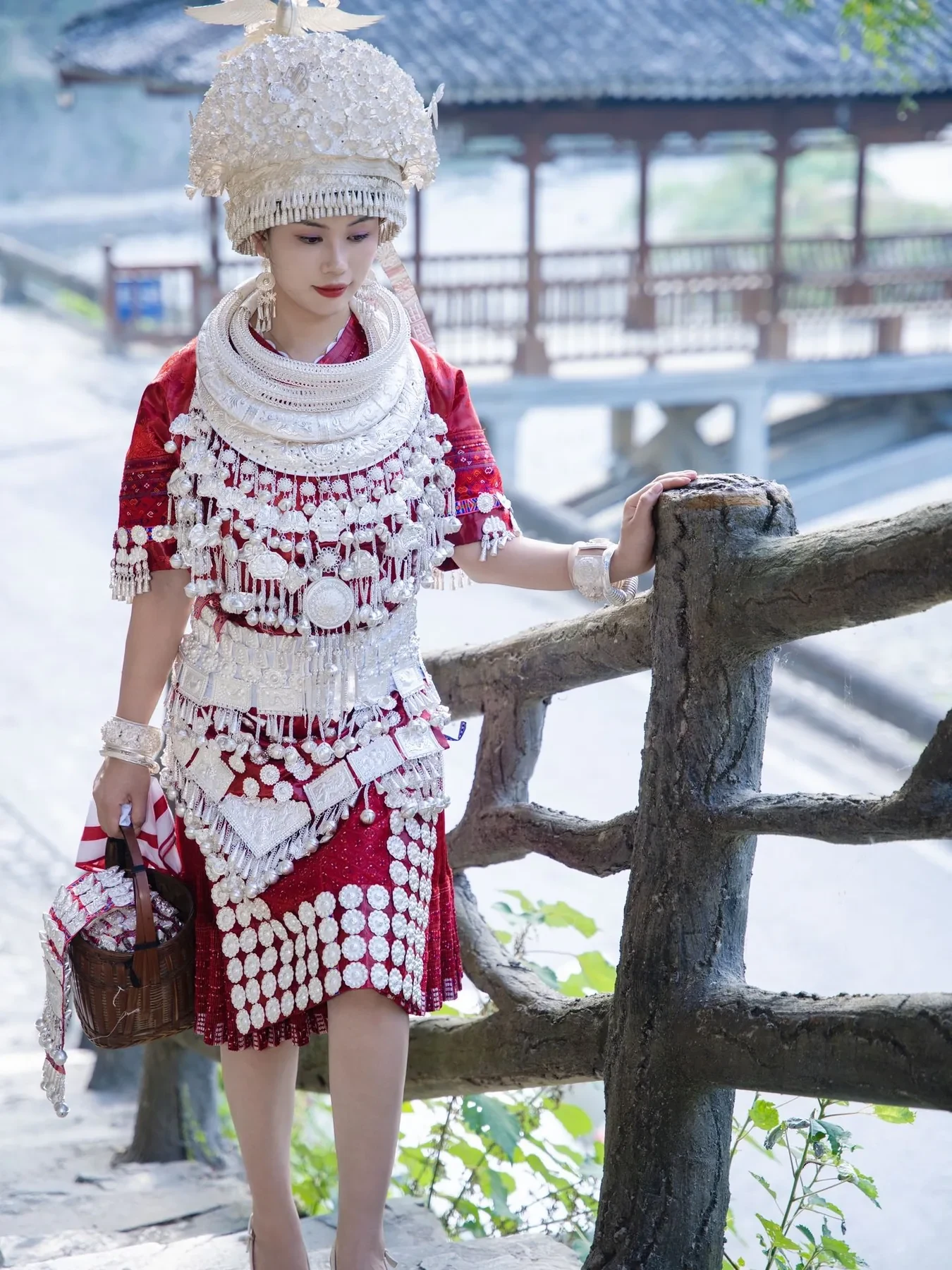
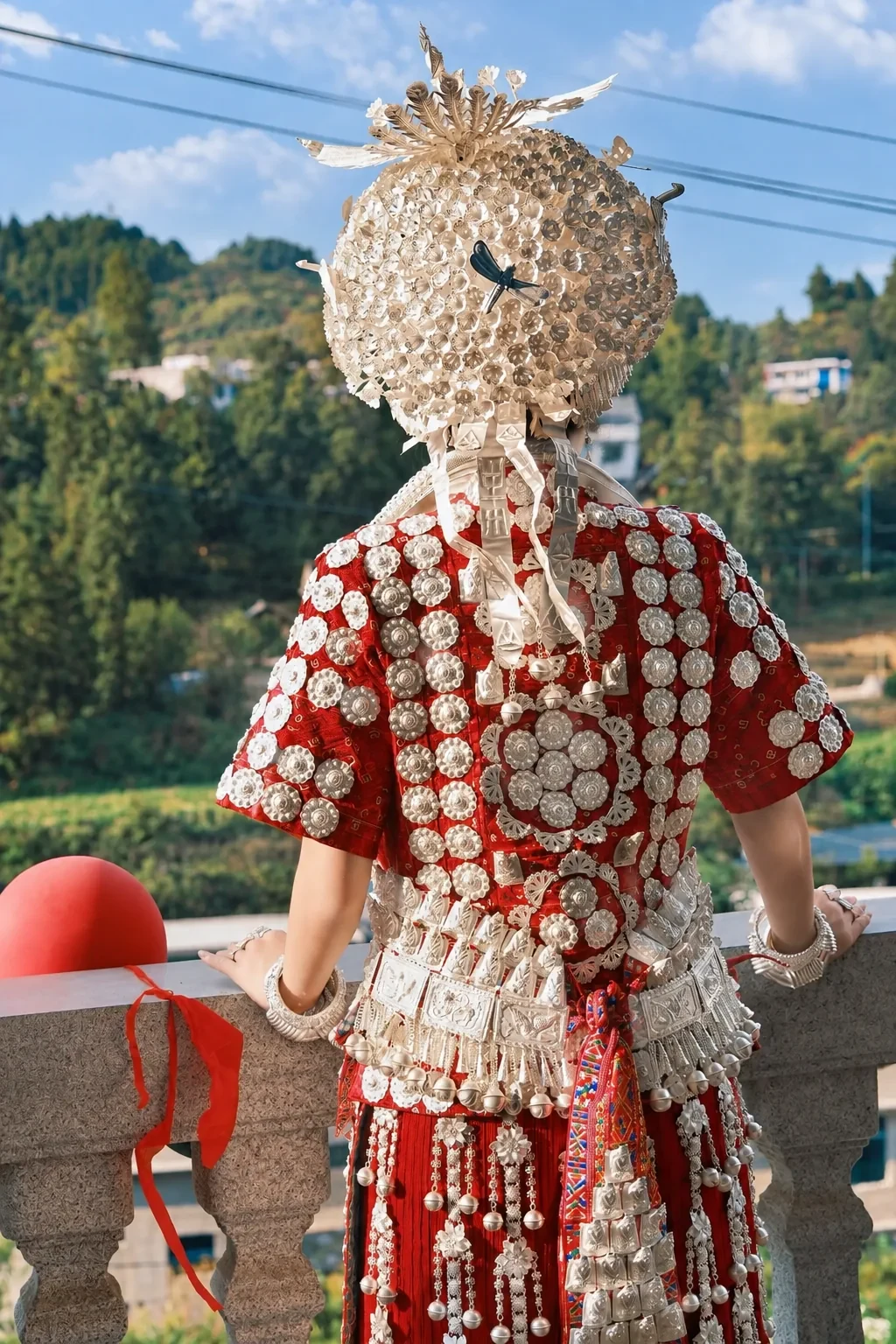
A frontal portrait shows the silver headdress, multiple neck rings, chest ornaments, waist elements, and textile as a single composition. A back view changes the reading completely. Rows of silver pieces continue across the shoulders and down the garment, showing that ceremonial dressing is designed around the whole body, not only the face and chest.
The importance of the full silhouette
In heritage photography, detail shots are often more dramatic than complete outfits. But without a full silhouette, the viewer loses scale.
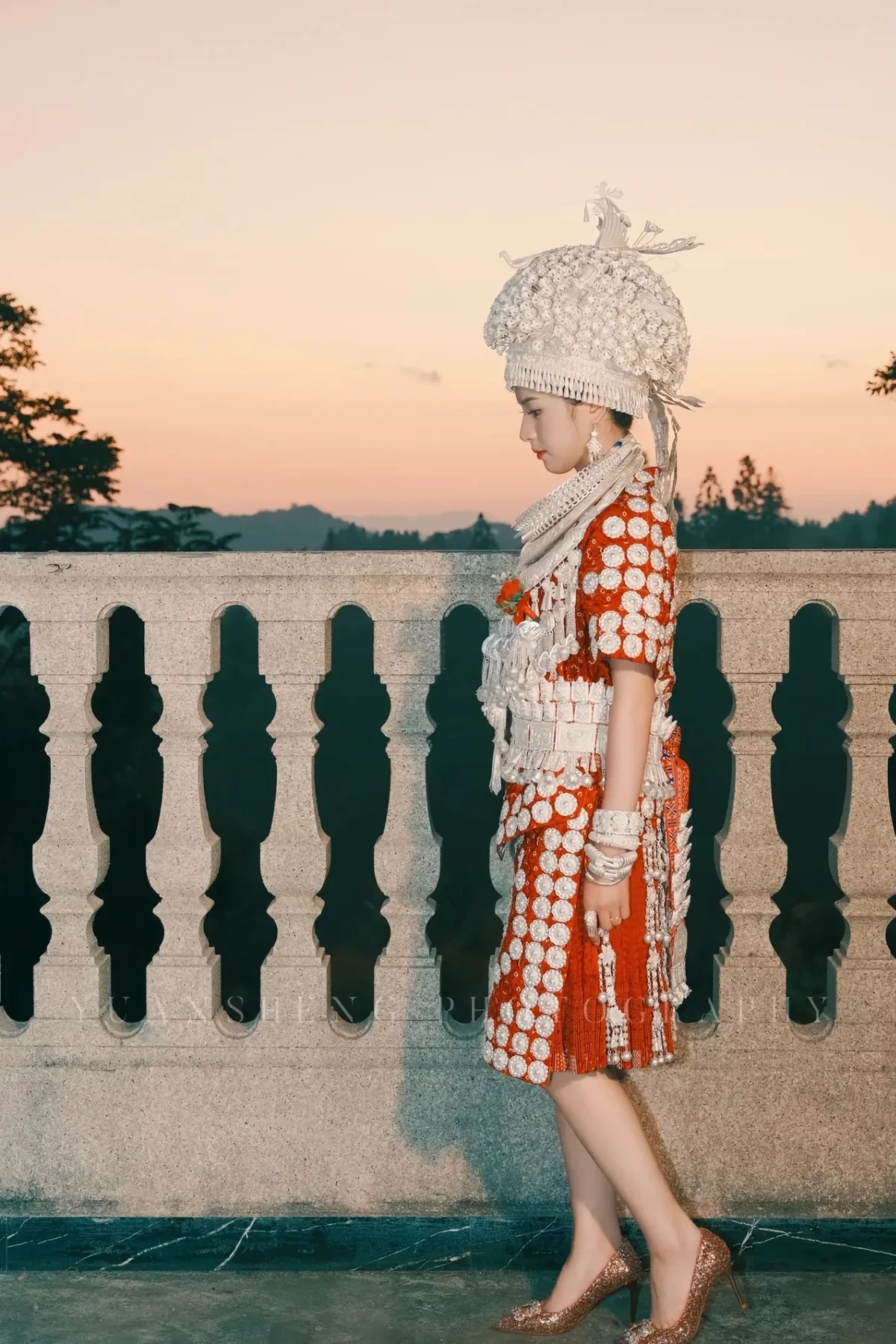
The Huangping images show how the silver mass at the head and upper body is balanced by a narrower red lower garment. The headdress adds height. The neck rings widen the upper silhouette. Repeated silver plaques build brightness across the torso.
This is why the side-view image is particularly valuable. From profile, the depth of the headdress and the projection of the neck and chest ornaments become easier to understand.
Red as the ground for silver
It is safer to describe color first as a visual and material decision rather than assign one universal symbolic meaning. Miao communities in Guizhou are highly diverse, and color usage varies by locality, garment type, age, and occasion.
In this Huangping set, red functions as a powerful ground. It gives the silver clear contrast, makes small metal elements readable at a distance, and unifies the different parts of the outfit. The result is ceremonial presence rather than simple decoration.
The back is part of the design
One of the most useful additions to this archive is the Huangping back view. It reveals a dense arrangement of round silver elements and suspended pieces that are almost invisible in standard frontal imagery.
For anyone studying traditional dress, the back matters for three reasons. First, it documents garment construction. Second, it records the placement of ornament. Third, it shows how the outfit behaves when the wearer turns or walks.
A cultural archive that only preserves the front of a garment preserves only half the information.
Silverwork as regional culture
The Guizhou Provincial Museum maintains major collections of Miao costume and silverwork, and its exhibitions emphasize that silver traditions vary substantially across regions and communities. Forms, quantities, and decorative systems are not interchangeable.
That regionality should guide the way we write about Huangping. Instead of calling every circular plate, flower form, or pendant by a universal symbolic name, we can document what is visible and build deeper interpretation only when specific sources support it.
Looking at craftsmanship
Several levels of workmanship are visible at once:
the metalwork of headdress and body ornaments;
the arrangement and attachment of repeated silver pieces;
the textile ground beneath them;
the construction that carries the weight of the silver;
the smaller details around cuffs, waist, and accessories.
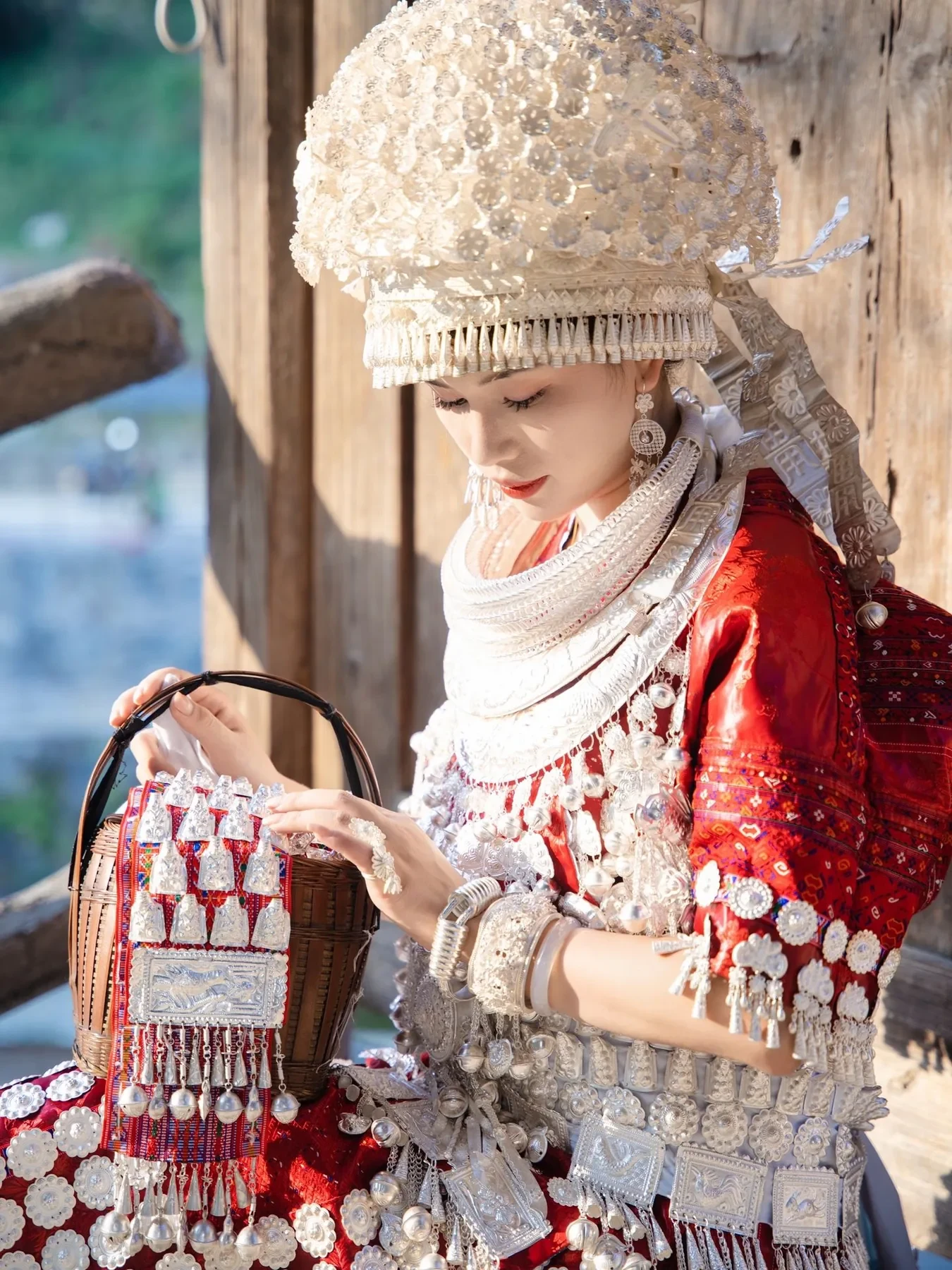
The basket photograph is useful precisely because it shows ceremonial dress in a more intimate context. Rather than reducing the outfit to a stage image, it shows the relationship between elaborate adornment and ordinary materials.
A living tradition
Traditional dress should not be treated as a frozen museum object. It continues to be worn, photographed, remade, inherited, and interpreted.
For AETHNO, the Huangping series is documented as living heritage: a regional dress language whose value lies in the combination of material skill, collective memory, and ceremonial presentation.
The best way to view it is to move from the overall red-and-silver silhouette to the details, and then to the back. Each angle adds information that the previous one cannot provide.
Continue exploring: What Is Miao Embroidery? · Jianhe Miao Dress: Silverwork, Red Geometry, and Regional Identity
Shop AETHNO: All products | Women | Men | Kids | Hmong New Year 2026 | Wholesale